Authored Narratives: Journals and Diaries in Video Games

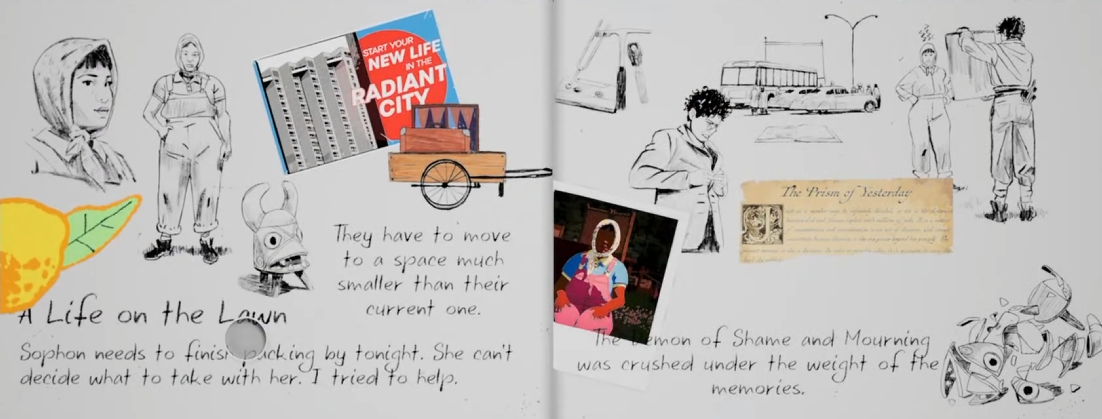
Journals and diaries have often played an important part of open-world video games and story-driven titles. They would help collect clues, carry documents, draw the portrait of characters we wish to remember, and capture the fleeting feeling of a moment in a few words.
In the best case scenario, they offer unique curation opportunities, invite us to observe the game world with particular care, and engage players to exercise creative agency and authorship as part of gameplay - activities where players have the opportunity to depict the characters they hold dear, and decide how they should be remembered for narrative posterity.
This article will explore how journal and diaries operate across a selection of games previously featured on MattGoesRogueLP, and how this paper companion services our game experience in many different ways.
Read Dead Redemption 2
Starting this article with RD2 (for short) is setting up the bar to what in-game journals and diaries can do best - authoring your own story as part of the wider narrative at play.
Game Credit: Rockstar Games | Video by Blue El Diamante
In RD2, Arthur Morgan carries a journal where his relationship with places, people and things are seen through the lens of a poetic and humorous observer. The pages of the journal reveal the sensitive and existential nature of the character, often contrasted with the brutality of his life circumstances - and the bloody dealings of the Van Der Linde gang.
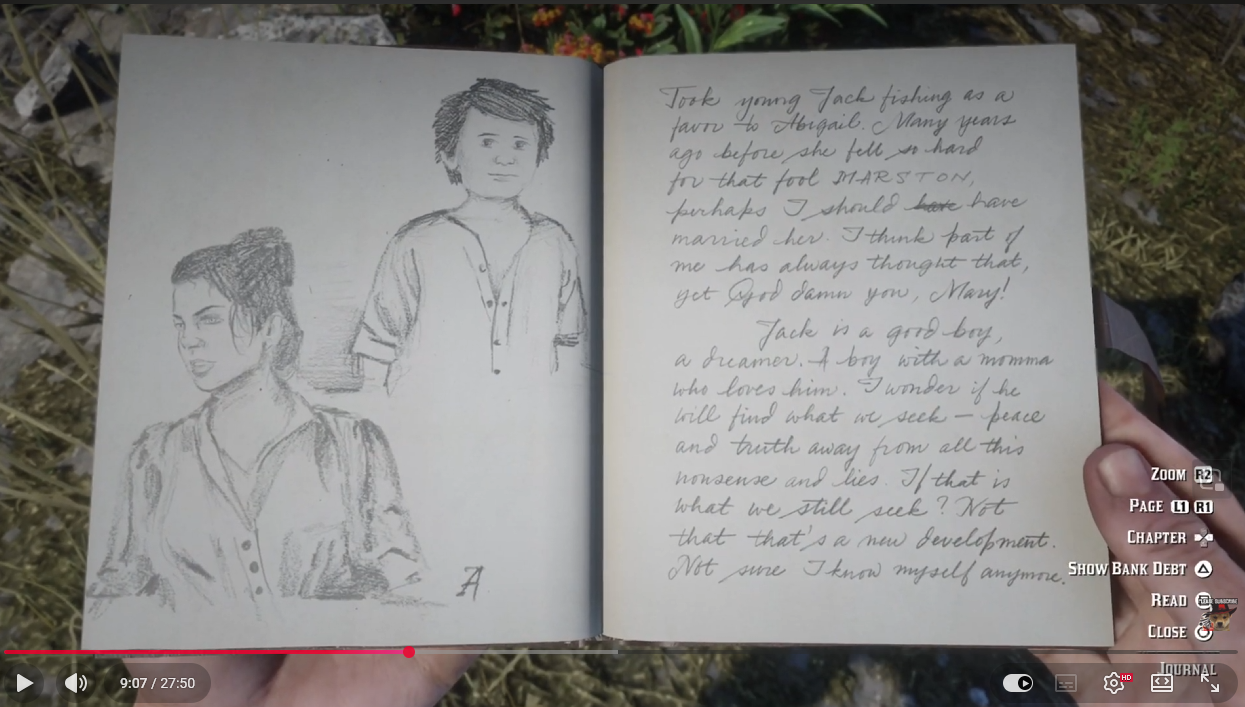
Overtime, players started to take notice how the journal entry system was operating, and how the various elements collected by Arthur (known as points of interests) would be featured on the page according to their nature (such as events, conversations, mission completion, landmark, flora and fauna, legendary target, etc). Now aware how these information would show on the page, players took on the challenge to create the most complete, aesthetic, or dramatic depiction of this journal by curating Arthur's experience as a new kind of gameplay.
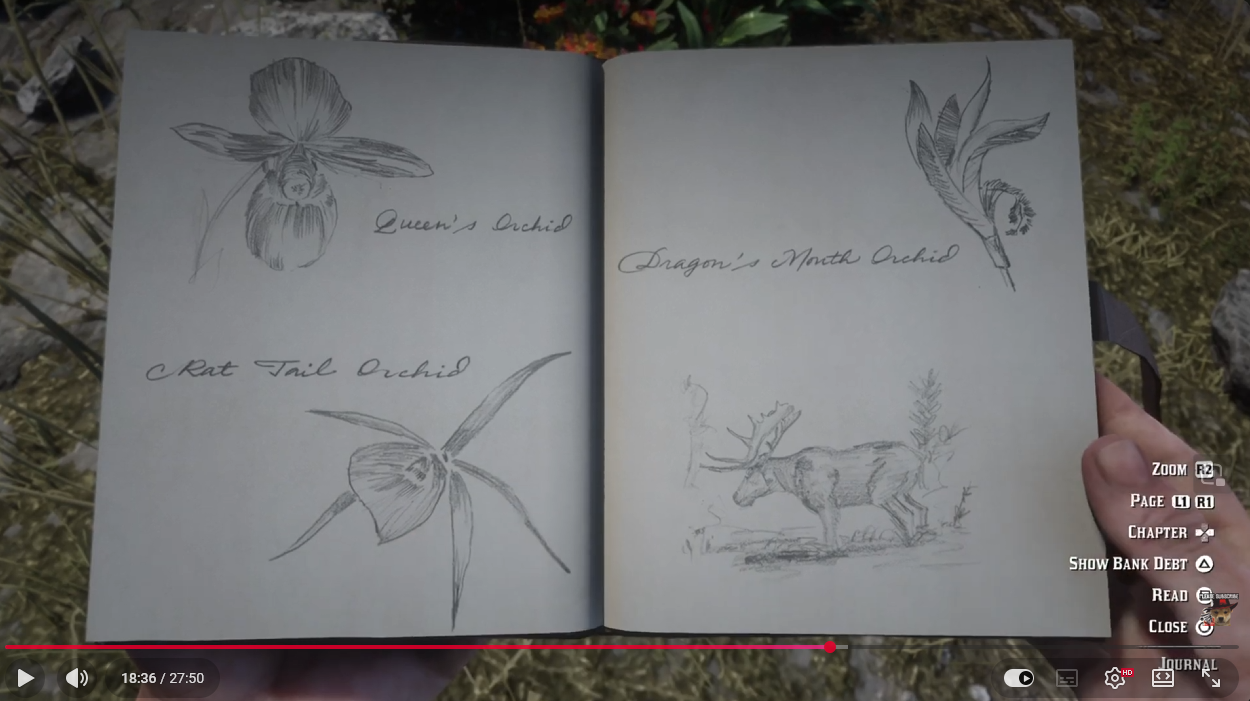
This journal-centric approach of RD2 transformed the game experience as a large-scale curation exercise, and inspired new game behaviours to ensure journal notes would either be displayed harmoniously, operate as a visual commentary for each others, foreshadow or contradict Arthur's fate, or demonstrate visual storytelling qualities - creating intentional rhythm, tension and suspense from one page to the other.
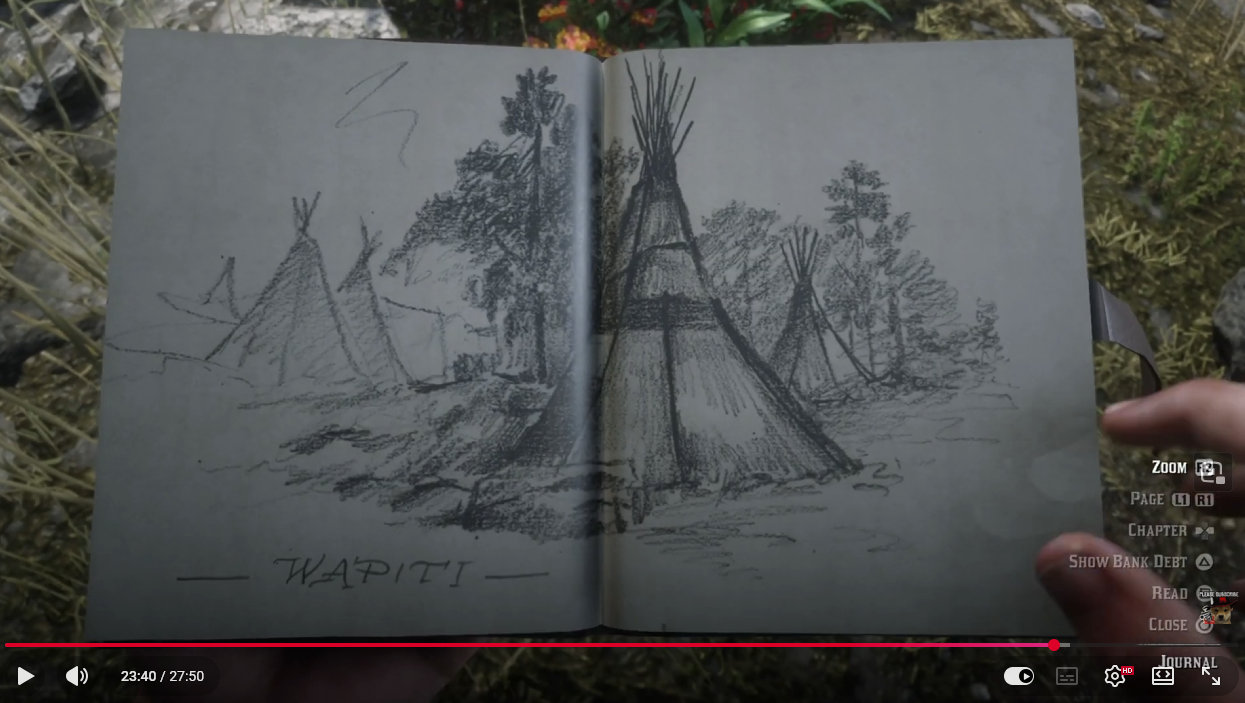
Since the emergence of this new play-style, many websites and forums have shared best practices on how to complete Arthur's journal, and to, ultimately, tell your own version of Arthur's journey.
When asking Blue El Diamante about their experience completing Arthur's journal, they quoted they favourite outlaw (as a true fan would): 'YOU SIR, ARE A FISH!' - I loved it all the wayyyy!'
Image credit: Red Dead Redemption 2 - courtesy of Rockstar Games | Video by BlueElDiamanteG (Youtube)
Uncharted 4
Nathan's journals have always played a very central part of his adventures - helping to collect clues, hand-written notes and drawing, folded letters and documents - and even saved him from taking a bullet or two (all pretty useful, really).
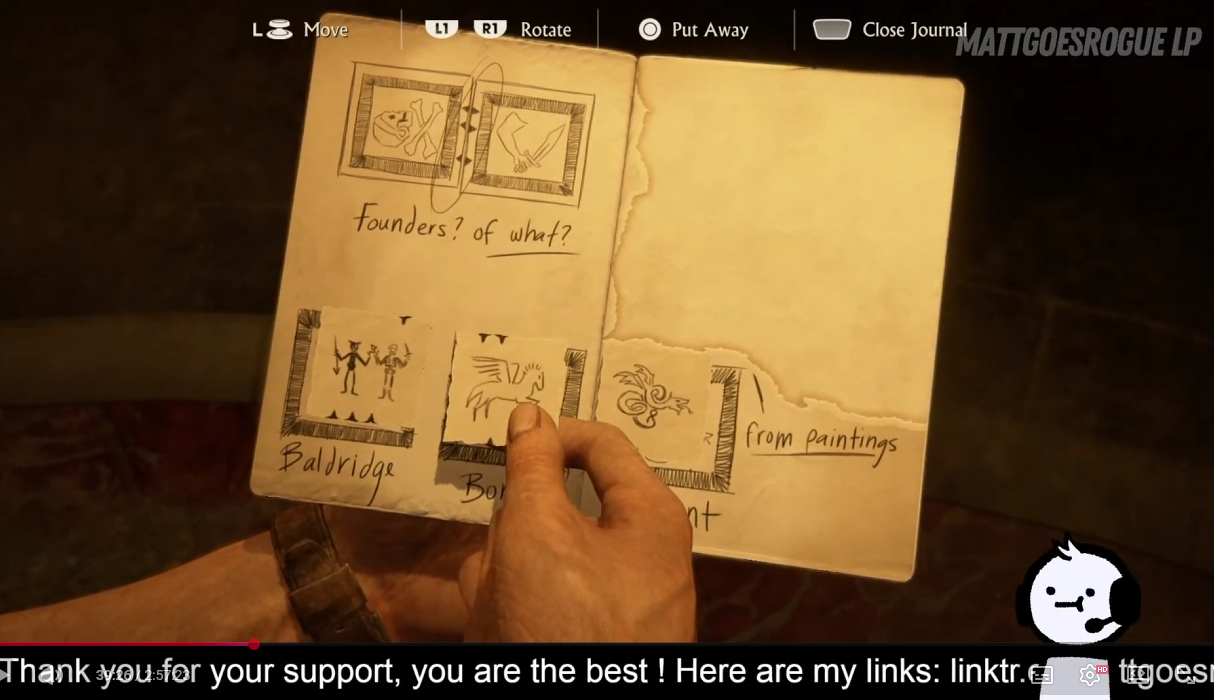
Yet, one of the most singular use of of Nathan's journal appeared in Uncharted 4 where the paper companion was no longer used as a journal - but as a riddle solving prototype. A page was sacrificed and torn in small squares to replicate the tiles of a complex puzzle at play. This unique use of the journal allowed Nathan to adjust the order of symbols, pivot their positions, and agree on the best possible outcome before pressing the levers of the machine in front of him. This kinaesthetic use of paper material, and somewhat destructive use of the journal itself, became a major part of solving the challenge play.
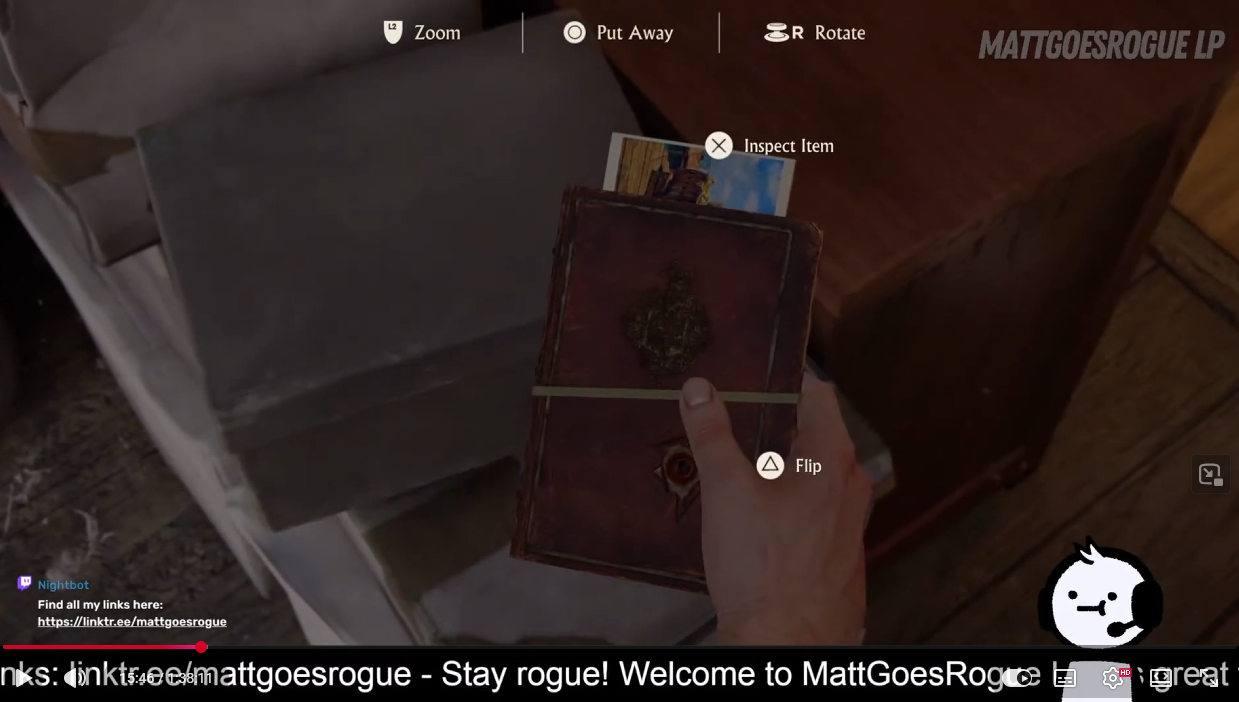
It's also worth noting the concept of journal and diary is very key to the plot of Uncharted 4. Early in the game, young Nathan and Sam decide to invade a private property to redeem the journal of their mother, Cassandra Morgan (no relation with Arthur). This precious volume holds the notes of her most ambitious research project: finding the lost treasure of Henry Avery.
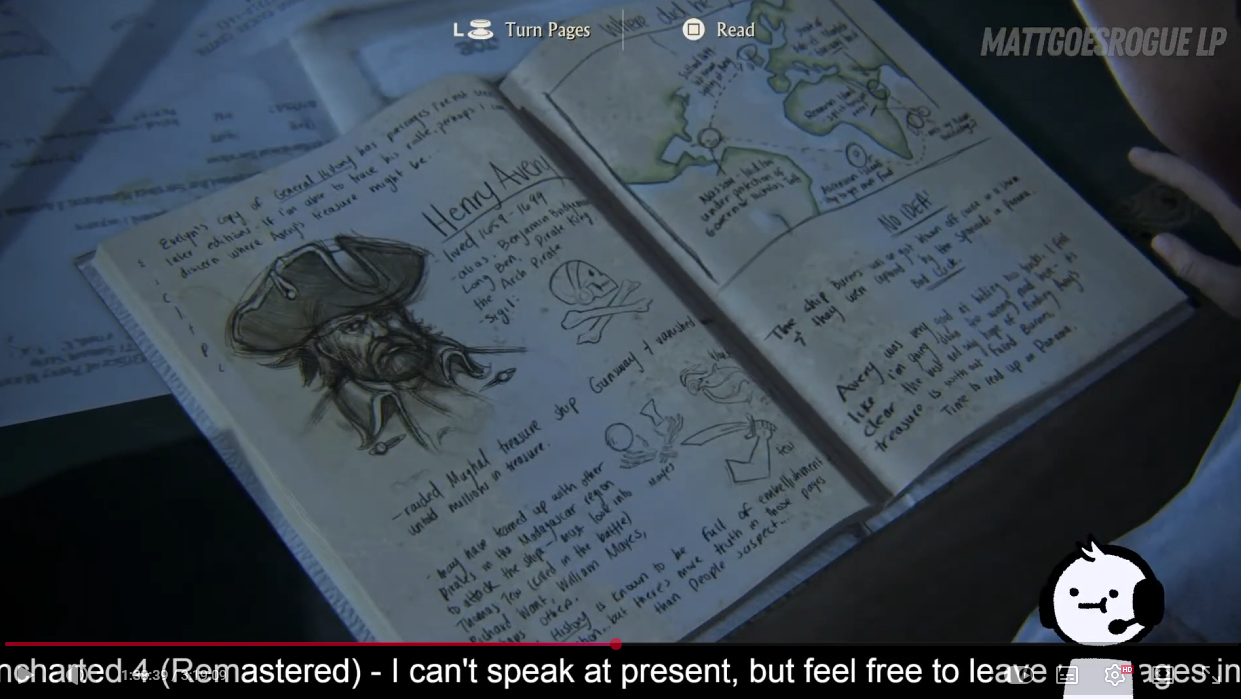
This analogue device, here standing as the keeper of her hard-earned knowledge and life-long obsession will propel the two brothers on a 30 years-long adventure - and will help further define their identity as the 'Drake brothers'.
Image credit: Uncharted 4 - courtesy of Naughty Dog, LLC | Seen on MattGoesRogue LP (Youtube).
Call of the Sea
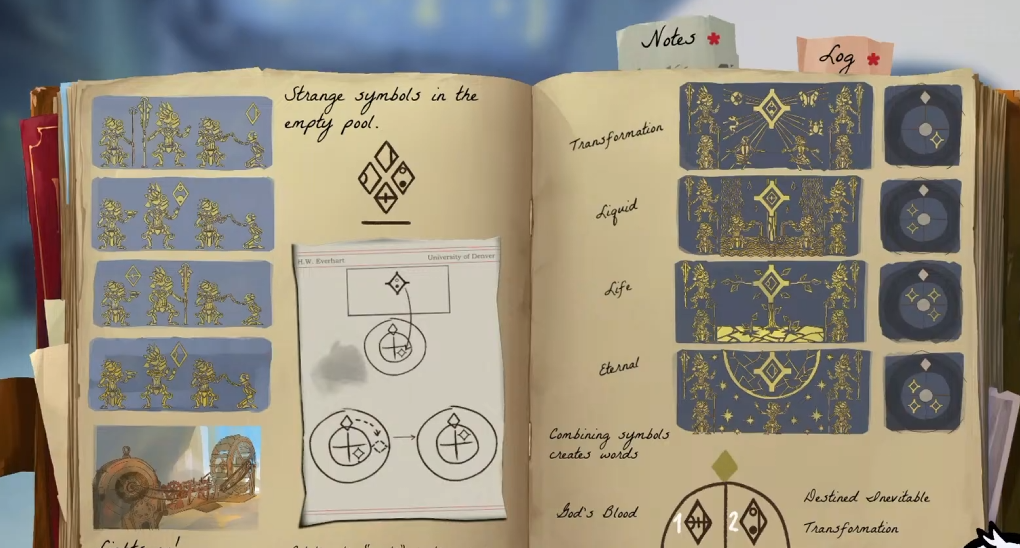
Players use Norah's diary to collect notes and logs entries as she explores a mysterious island in hope to be reunited with her lost husband. Her is used in-situ to help to sustain game immersion and prevent UI clutter.
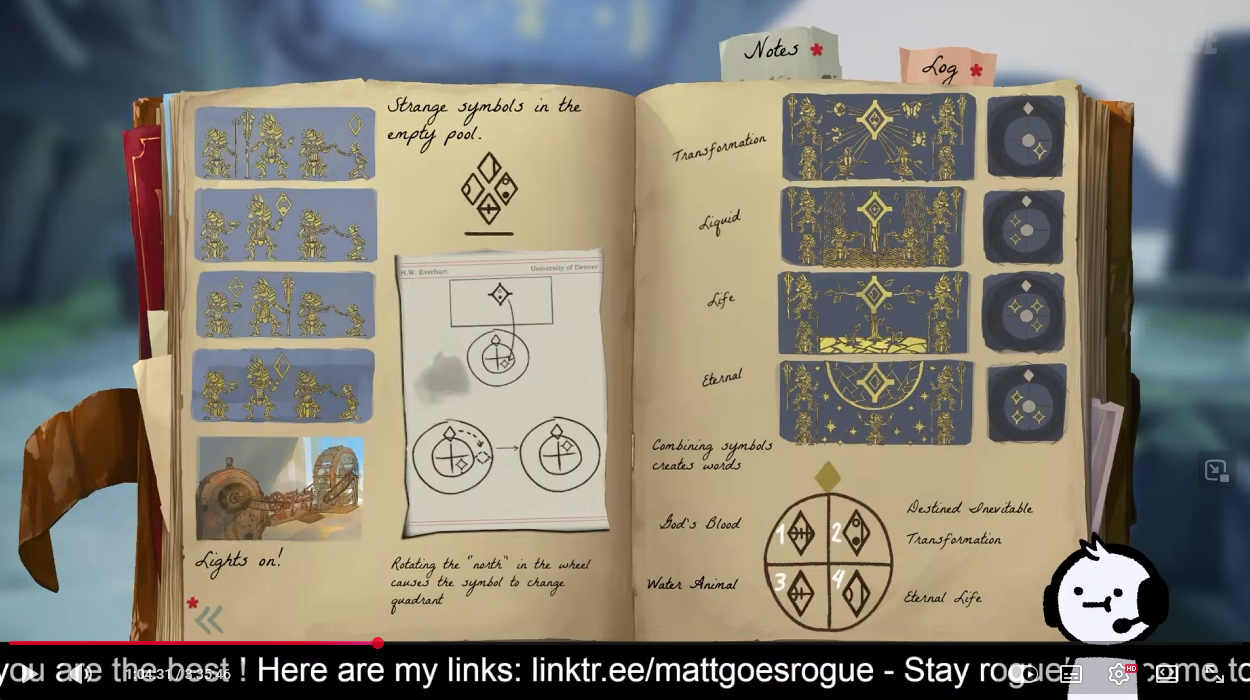
In addition to the collection of significant elements, the journal helps Norah express her inner-thoughts during her trepidations - similar to Arthur's journal, it provides the comfort of privacy to express her sensitive nature, doubts, fears, wonderment, and more. It's also worth noting Norah's journal is a testament to her skills and abilities as an artist and art teacher - with each page drawn and painted with beautiful sceneries and ornate details.
'Norah's Diary Edition' (limited edition) is featuring the casing design of her iconic diary as the collector box of the game. Players have the possibility to own this symbolic object holding a copy of the game alongside exclusive items (art-book, poster, pictures, etc). It wouldn't be stretch of the imagination to consider the opportunity of a meta-narrative, where the players would 'find' Norah's journal and explore her story as a retrospective game experience
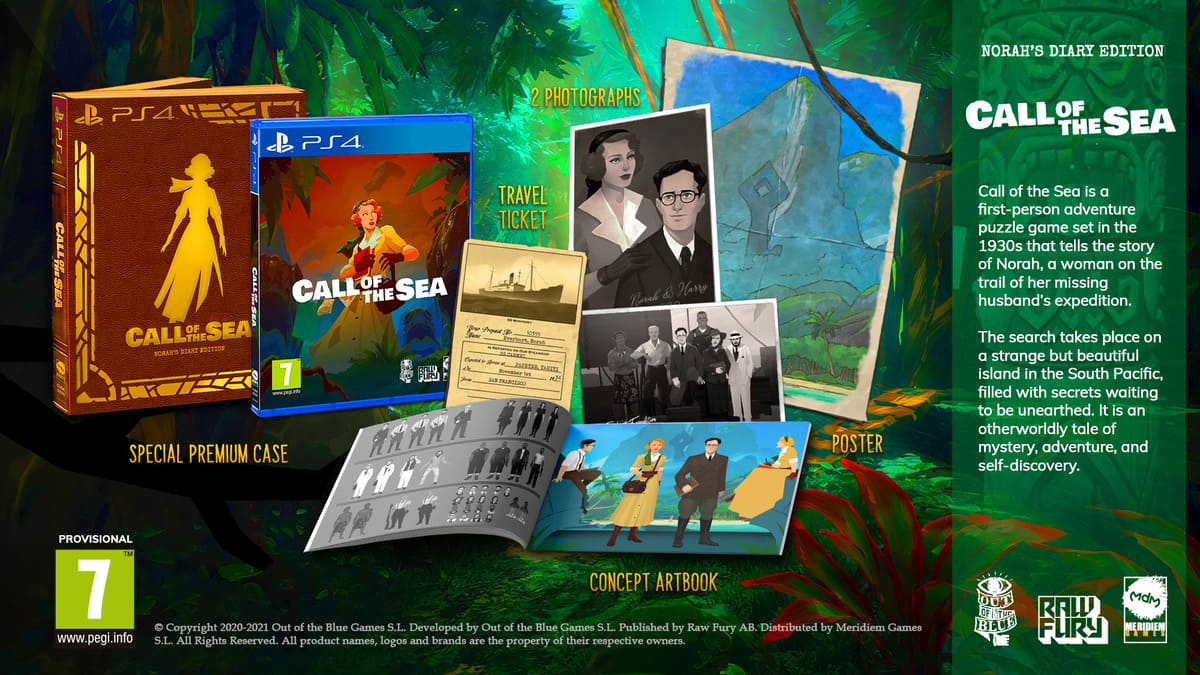
Image credit: Call of the Sea - courtesy of Out of the Blue and Raw Fury | Seen on MattGoesRogue LP (Youtube)
Season: A Letter To The Future
Estelle's journal is at the heart of the story of Season: A Letter To The Future. As she ventures in the different parts of Tieng Valley, she captures pictures, drawings, sound bites, and accessories in an effort to preserve the details of a world deemed to disappear in the near future.
The game invites players to explore, observe, collect, and log the details of specific areas of this world to unlock Estelle's commentary - and access the next part of the narrative. With sensory investigation and curation activities as core mechanics of the game, the player is invited to invest a slow and sustained attention for the world surrounding Estelle in order to progress in the game...
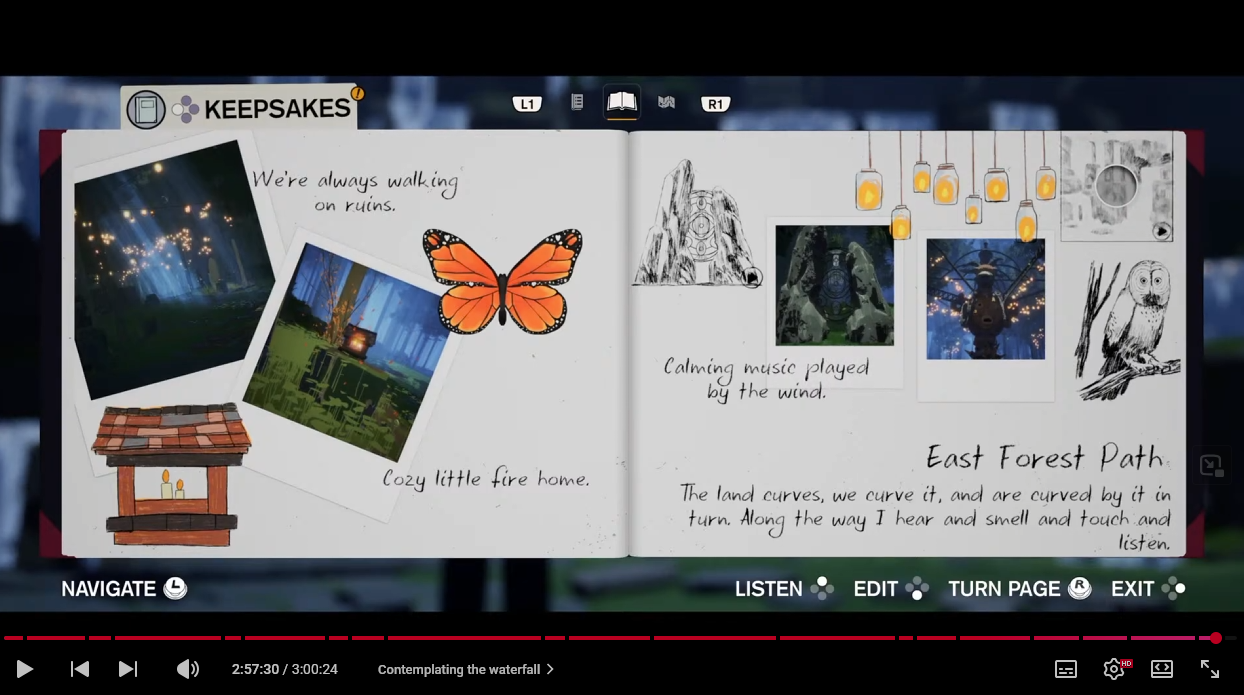
Unlike any other games I have played, Season: A Letter To The Future gives agency to the player to include, omit, delete, organise, and decorate the journal to their liking - making this phase of play both a creative exercise of ornamentation and authoring.
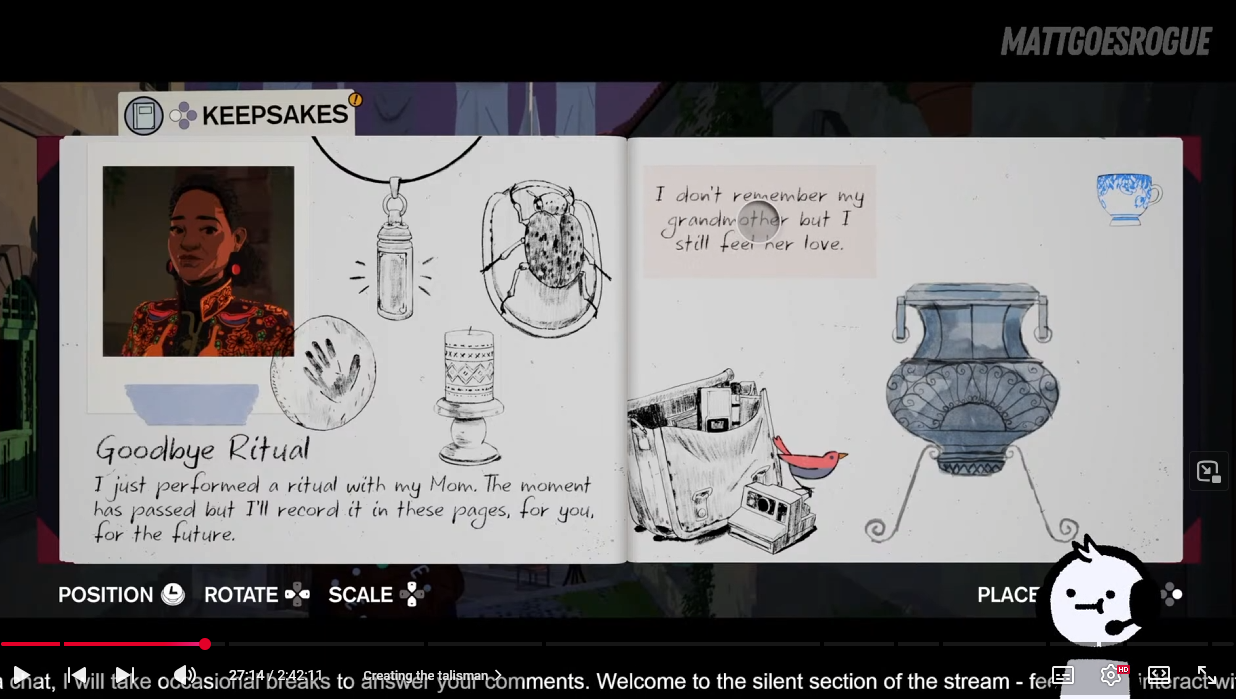
Was it a significant moment? Should this character be remembered? Does Estelle's identity depend of her own memories? These are only a few questions players will ask themselves as they are saving precious (or candid) memories of the valley for future generations to come.
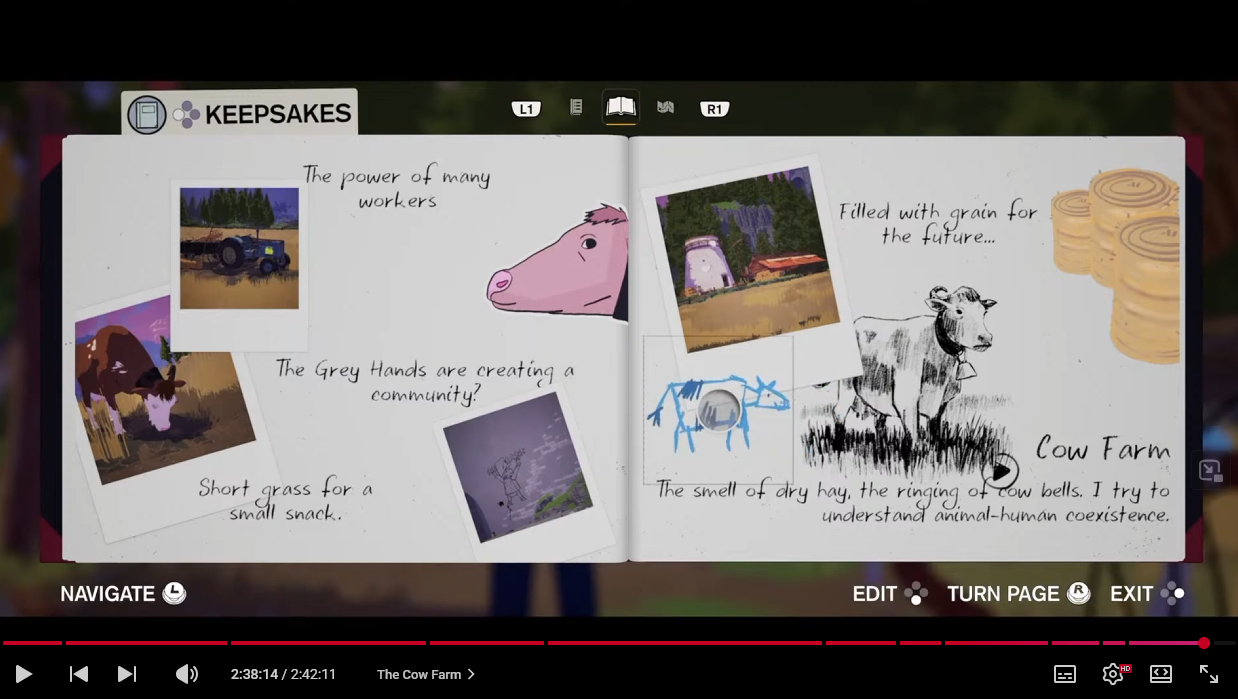
This game is a unique, touching and rewarding experience; as well as a very singular use of journaling (one you will never forget).
Image credit: Season: A Letter to the Future - courtesy of Scavenger Studio | Seen on MattGoesRogue LP (Youtube).
Indiana Jones and the Great Circle
It would be difficult to imagine Dr. Jones without his brown leather journal - his paper-friend was, after all, a critical ally in Indiana Jones and The Last Crusade guiding his every steps towards the Holly Grail (courtesy of Dr. Jones Senior).
The same will apply to Indiana Jones and The Great Circle, where our favourite archaeologist-extraordinaire is gifted with a brand new journal at the beginning of his adventure (a blank one this time) from a past lover.
As the game unfolds, the journal will be used to carry maps, collect photos and drawings, report clues, safe-keep newspaper clippings, and all sorts of information relevant to Indy's journey around the globe.
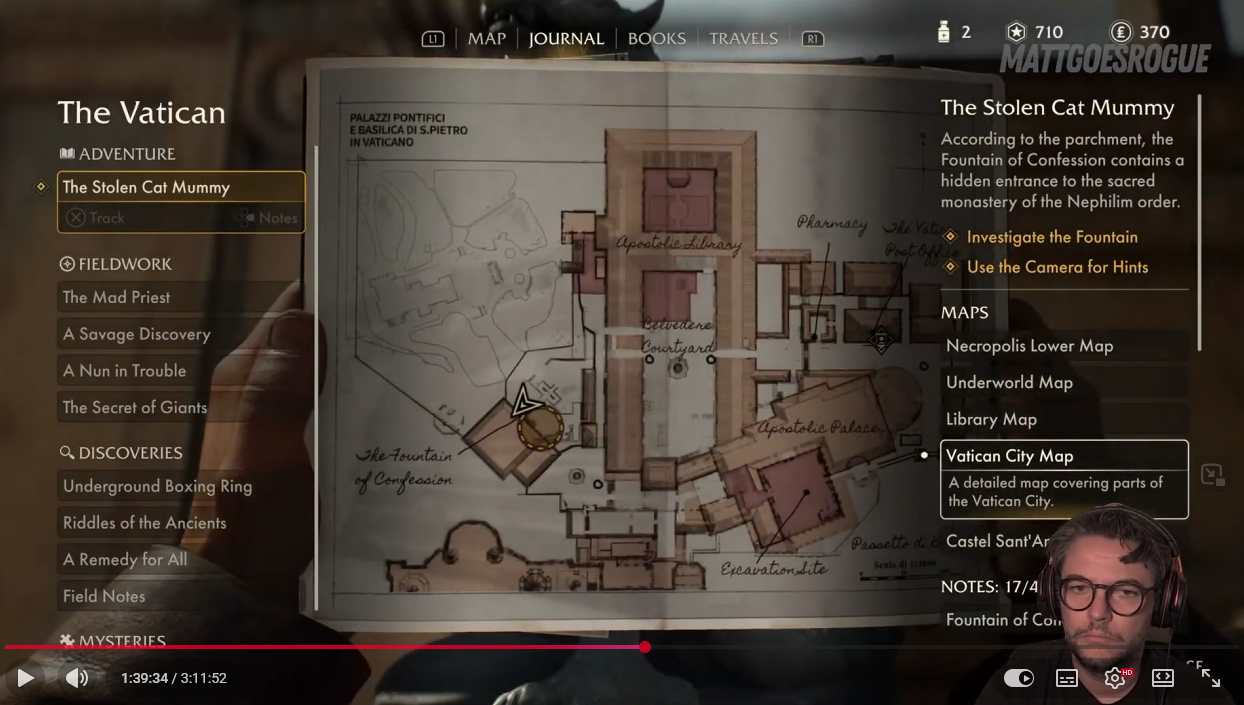
In a very singular way, the journal can be enhanced by a rich interface listing core missions and sub-objectives with interactive effects unto the pages. As such, Indy's journal becomes the canvas of a very impressive dialogue between diegetic and non-diegetic elements, working together to deliver rich information in a stylish and efficient manner.
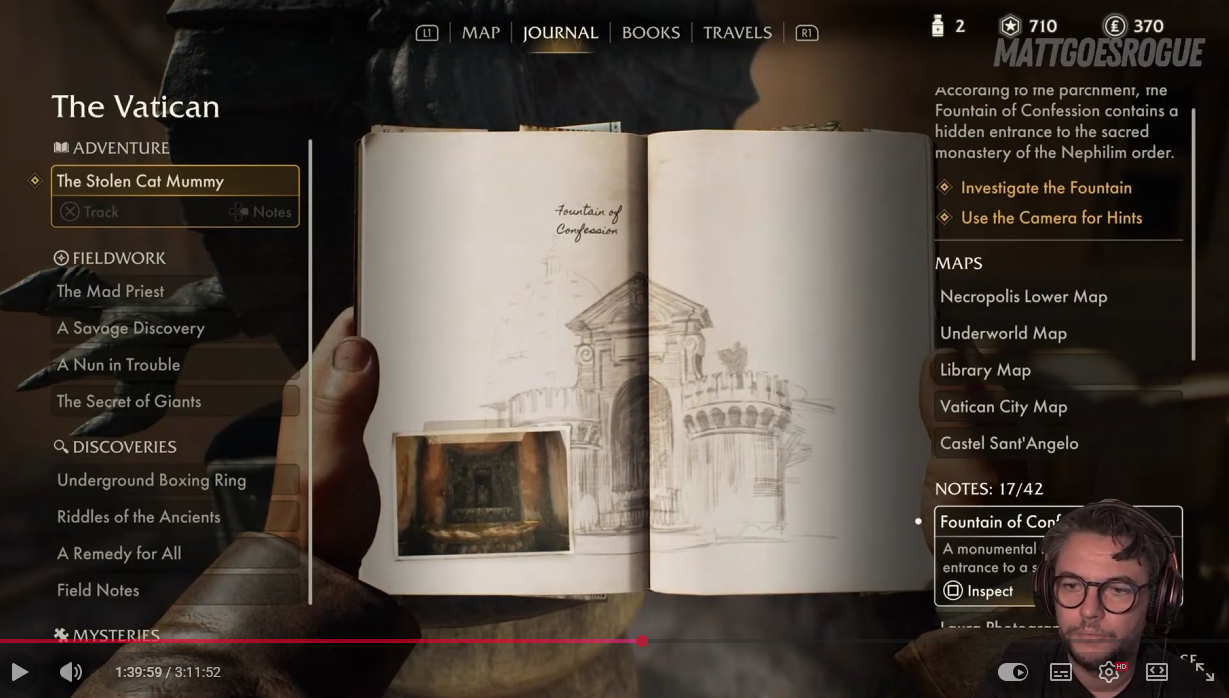
Whilst the multi-level category of information could risk friction and, ultimately, be overlooked for all it has to offer; Indy's journal is more an 'adventure bible' than a traditional back-pocket notebook.
Always available, but never mandatory - players can decide how much or little they wish to use it. In my experience I found it extremely useful to navigate space, prepare missions, track mission objectives and collectables, as well as to complete fieldwork (side-quets) - I also enjoy revising past chapters with fondness.
Similar to the phenomenon witnessed around Arthur's Journal in RD2, I believe some players will be likely to develop strategies and dedicated behaviour to ensure full completion of the 'Great Circle Journal'.
Image credit: Indiana Jones and the Great Circle - courtesy of Lucasfilm Ltd., MachineGames Sweden AB and ZeniMax | Seen MattGoesRogue LP (Youtube).
Final words
Either they hold a collection of useful information or a handful precious memories, help capture the inner world of a protagonist, or simply display maps and objectives; it makes no doubt journal and diaries will continue to be used as the loyal companions of our adventures - all sharing something unique about their owners and the world they inhabit...
Mentioned in this article
Journal, Diary, Notebook, Read Dead Redemption 2, Uncharted 4, Call of the Sea, Seaons: A Letter To The Future, Indiana Jones and the Great Circle, Indiana Jones and the Last Crusade, Diegetic, Non-diegetic, Authoring, Clues, Drawings, Puzzles
With special thanks to BlueElDiamanteG (YouTube link) for sharing the RD2 video for the purpose of this article.
© 2026 MattGoesRogue. All rights reserved.